Electric vehicle supply equipment (EVSE) is a system of charging equipment that often gets confused with an EV charging station.
EVSE refers to the entire system of equipment used to safely and reliably charge vehicles at home, work, or public charging stations. An EV charging station is just one part of this broader system.
Here, we’ll break EVSE down into simple terms and cover why it’s a vital part of expanding access to EV charging.
Key Summary
- An EV charger is the actual device used to charge an electric vehicle
- EVSE (electric vehicle supply equipment) is the technical term for the full system that safely delivers electricity to the vehicle
- EVSE components include the EV chargers, ports, cables, firmware, and all the systems that manage power delivery and communicate between the equipment and vehicle
- EVSE controls the safe transfer of electricity from the power supply to an electric vehicle
- Different EVSE charging levels require different outputs, connectors, firmware, and speeds
What Does EVSE Mean?
EVSE stands for Electric Vehicle Supply Equipment. It is a system of equipment that safely connects electric vehicles to power and charge safely.
EVSE is a broad term that includes the equipment and systems that manage:
- Delivery of electricity from the power source to the EV’s battery
- Communication between the charging equipment and the vehicle
- Safety measures, such as ensuring the appropriate level of electricity, shutting down in the event of a fault, and monitoring the connection
What Are the Components of EVSE?
EV charging stations have a system of components that work together, including:
- Housing or enclosures: This can range from a box-on-a-cable to a wall-mounted enclosure to pedestals or towers, depending on whether it is a home, work, or public charging station
- Electronics: A power supply, a main relay that controls the power, turning it on or off, a control module to manage the charging session and relay, and an electric circuit for each port
- Firmware: Software that functions to start and stop the charging session and enables components to communicate
- Network connectivity: Optional, for smart EV chargers
- Power connection: A way to connect to the grid, depending on the charging level. For home EV chargers, this is usually a standard outlet for Level 1 charging. Public EV charging usually features Level 2 charging. Learn more about Level 1 vs. Level 2 charging in our guide here: How to Charge EV at Home: Level 1 vs Level 2 Charging Options.
- Ports and cables: Cables are fitted with connectors that securely plug into EV ports. The type of connector depends on the charger type and level, AC or DC output, location, and connector standards set by your service provider.
You May Also Like: AC vs DC EV Chargers: Understanding the Differences
What Is the Difference Between EVSE and An Electric Vehicle Charger
EVSE and EV charger sound similar and are often used interchangeably. However, they are distinctly different:
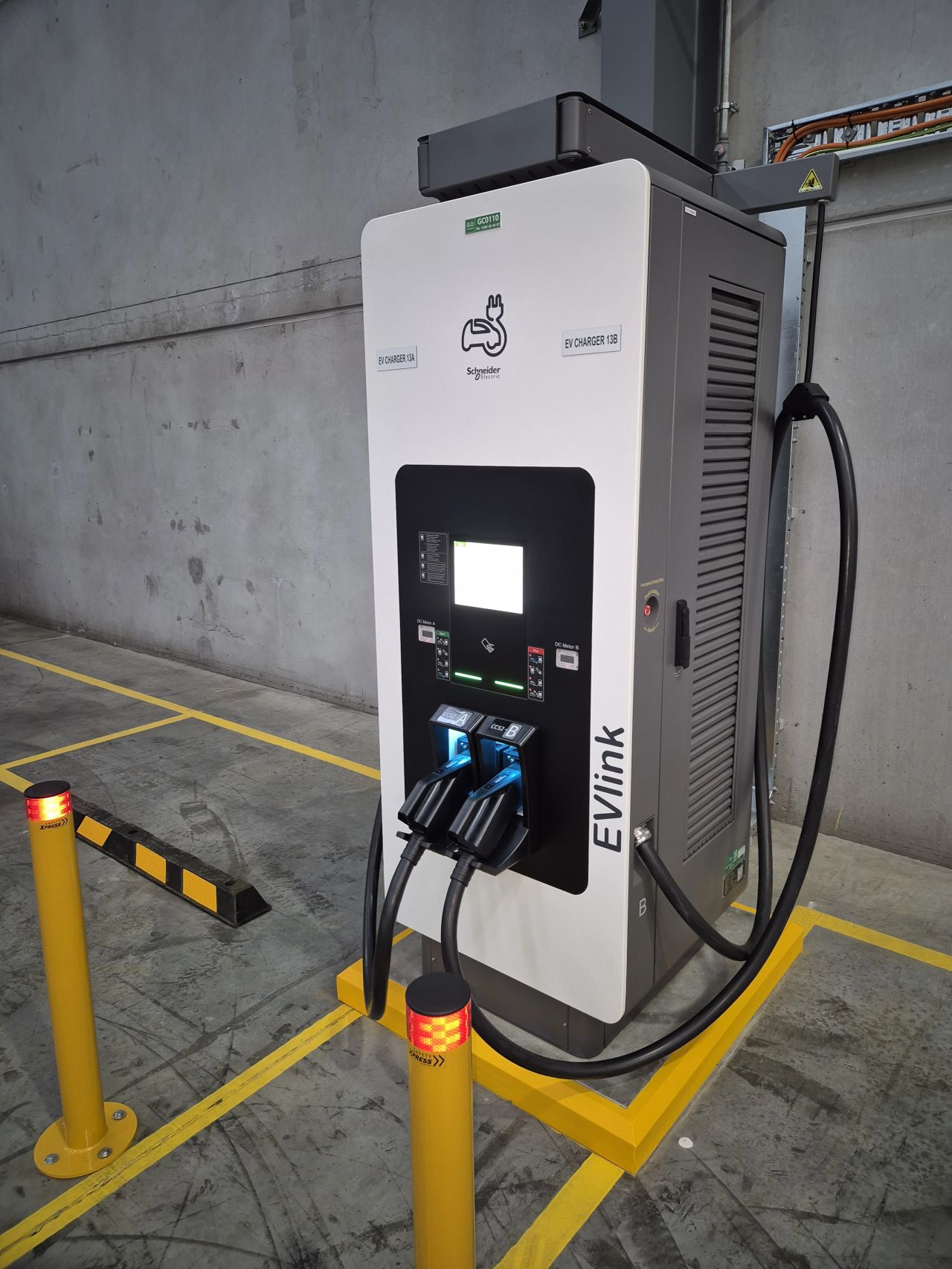
- EV Charger or EV Charging Station: The actual device or station used to charge an electric vehicle.
- EVSE: The technical term for the full system of equipment that safely delivers electricity to the vehicle. This system includes the EV charger, along with equipment to safely deliver electricity from the power source to the vehicle.
You May Also Like: What Makes an EV-Ready Building?
Applications of EVSE
EVSE can be used in a range of ways, including:
- Home Charging: Home charging is a common application of EVSE. For many EV drivers, charging at home overnight is a reliable, convenient charging option. Home charging stations are often installed in driveways or garages.
- Multi-Family Housing: Strata buildings often feature pedestal or wall-mounted EVSE units in parking garages for convenient overnight charging for tenants.
- Workplace Charging: Workplace EVSE enables daytime charging for fleet vehicles or staff members. Whether at a depot or office, workplace charging offers convenience and is an appealing option for tenants, staff, and clients.
- Public Charging: Public EVSE enables convenient EV charging for drivers who are at work or on the go. Well-planned EVSE enables longer travel distances and supports a more reliable EV charging network.
You May Also Like: Benefits of Fast DC EV Charging for Businesses
How EV Charging Systems Can Help with All Your EVSE Needs
EVSE serves as the critical foundation of large-scale charging infrastructure, ensuring safe, reliable home, work, and public charging stations.
At EV Charging Systems, we understand the critical link EVSE plays in delivering power from an electric source to an EV. We are your one-stop shop for comprehensive EV charging solutions, from commissioning to installation to servicing.
We’re proud to be trusted experts for EV charger installation for homes, businesses, government facilities, and organisations throughout Perth.
Our highly specialised team, consisting of licensed electricians, provides turnkey EV charger solutions. We handle every aspect of EVSE, including:
- Design
- Supply
- Installation
- Infrastructure requirements
- Software management
- Repairs
- Maintenance
- Ongoing support
Enquire now to speak with one of our licensed EV electricians or to schedule a free on-site quote.