Whether you have to charge a hybrid car depends entirely on what type it is. Some hybrid cars do not have plugs and cannot be charged. Other hybrid cars can be charged to maximise efficiency and fuel economy.
Here, we’ll explain the types of hybrid cars and how they charge so you can make the best choice for your needs.
Do You Have to Charge a Hybrid Car?
Unlike a traditional electric car, hybrids feature an internal combustion engine (ICE) and an electric motor. Hybrid cars rely on a combination of electricity and a petrol engine to power the vehicle.
How a hybrid car charges depends on the type of hybrid it is. There are two main types of hybrid cars: self-charging hybrids (HEVs) and Plug-in hybrids (PHEVs).
Standard Hybrid Electric Vehicle (HEV)
- No plug port
- Charges automatically by the ICE engine and regenerative braking
- Equipped with a small self-charging battery
- Requires Level 1 or Level 2 charging
Plug-in Hybrid Electric Vehicle (PHEV)
- Larger batteries that require external charging to maximise efficiency and electric driving range
- Can be charged at home or at public charging stations using Level 1 or Level 2 charging
- If you don’t charge it, it runs on petrol
- Running exclusively on petrol reduces efficiency and fuel economy
How Do Hybrid Cars Charge?
Different types of hybrid cars charge via a self-charging battery or plugging into an external charger.
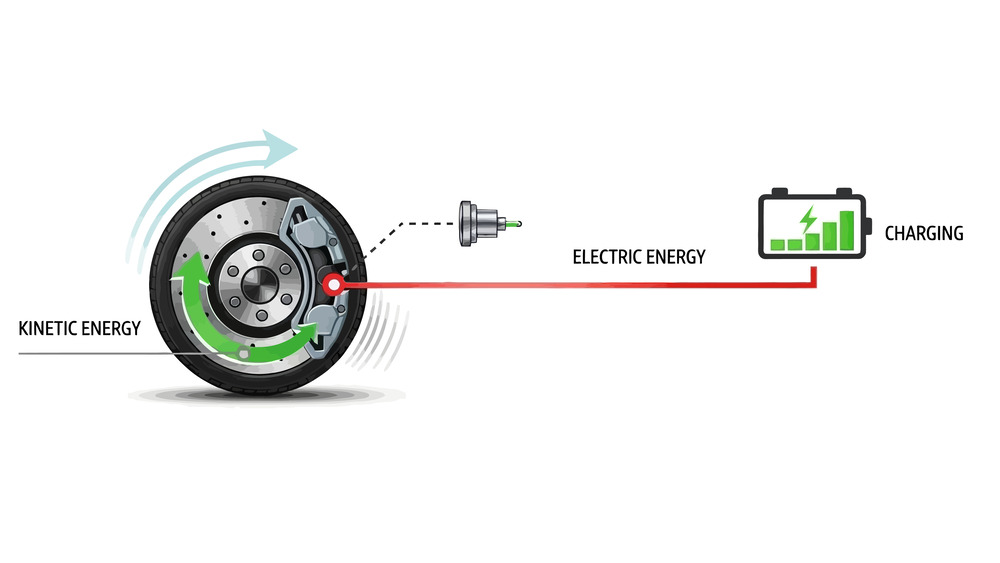
Conventional hybrid vehicles have self-charging batteries. They do not have a plug, so they cannot be plugged in to charge. Conventional hybrid vehicles capture energy during braking and use this to keep the battery full.
Plug-in hybrid vehicles require an external power source to be plugged in. If a plug-in hybrid is not charged via a charging station, it will use only petrol or diesel to run.
Charging for Conventional Hybrids (HEVs)
Charging hybrids (HEVs) occurs using regenerative braking. This is a process where a vehicle captures kinetic energy from the braking systems when slowing down. The energy collected is sent to the motor or stored in the battery for later use.
Charging for Plug-In Hybrid EVs
Plug-in hybrids must be charged externally to replenish their battery. A plug-in hybrid can still run without charging, but it will use only petrol, reducing fuel economy and efficiency.
How to charge a plug-in hybrid:
- Plug into an external charging station
- Options include dedicated home EV chargers or public charging stations
- Choose either Level 1 or Level 2 to recharge the battery
Levels of Charging for Hybrids
Since conventional hybrids do not have a plug, charging levels only apply to plug-in hybrids. Because PHEVs have small batteries, they rely on Level 1 or Level 2 charging. Plug-in hybrids cannot support Level 3 charging.
Level 1 EV Charging
- What It Is: Charging via a standard 120-volt AC home wall outlet
- Time to Battery Charged: 5 to 6 hours or overnight
- Usage: Daily home charging, especially if you have adequate parked time overnight and a shorter commute
Level 2 EV Charging
- What It Is: A dedicated 240 V circuit providing AC power
- Time to Battery Charged: 1 to 5 hours
- Ideal Usage: Plug-in hybrids that need a quick top-up from a public charging station or a dedicated home EV charger
Level 3 – DC Fast Charging
- What It Is: DC fast charging converts AC power to DC inside the charging station. This allows DC energy to be sent straight to the battery rather than getting converted via the car’s onboard charger.
- Time to Battery Charged: 20 to 60 minutes
- Ideal Usage: Plug-in hybrids and traditional hybrids cannot use Level 3 charging stations; their on-board hardware and smaller battery size cannot support the high-speed direct current
Charging a Hybrid at Home
A conventional hybrid car does not have a plug and cannot be charged at home. Its self-charging battery will replenish during regenerative braking.
Charging a plug-in hybrid at home in Australia is a convenient, straightforward option. However, it does require some patience as the charging process will take several hours. Many plug-in hybrid owners simply charge their hybrid overnight.
If you want to speed up the charging process, a dedicated home charger can help. Learn more here: Home EV Charger Installation Perth & WA.
Charging a Hybrid for a Business/Fleet
Successful hybrid fleet charging depends on:
- Available space
- Charging infrastructure
- Charging level required
- Number of vehicles
- Dwell time
Charging a hybrid EV fleet requires Level 2 charging as hybrids cannot support Level 3 charging.
At EV Charging Systems, we can optimise your fleet electrification according to your needs, number of vehicles, and setup.
Learn more about how to plan hybrid EV fleet charging here: EV Fleet Charging Guide: Infrastructure, Costs and Tips.
Tailored EV Charging Solutions in WA
Most hybrid vehicles self-charge the electric motor through regenerative braking systems. These conventional hybrids do not need to be charged or plugged in. Plug-in hybrid vehicles do require an external charging source to charge the battery and maximise efficiency.
Looking for an all-in-one hybrid charging solution? We provide comprehensive turnkey EV charging solutions for hybrids and traditional electric vehicles. From a site assessment to supply, installation, commissioning, load management, and repairs, we make EV charging solutions easy.
Contact us to book your site assessment or to speak to one of our licensed EV electricians.