On Jan 1, 2026, new label regulations took effect for electric vehicles, hydrogen fuel-cell vehicles, and hybrid vehicles in WA. These mandatory labels carry an important safety purpose and must be displayed appropriately on front and rear plates.
Here’s everything you need to know about WA’s new EV label requirements 2026 and how to ensure you are in compliance.
Key Summary
- On Jan 1, 2026 new regulations took effect for labels on electric vehicles, hybrid, and hydrogen fuel cell vehicles
- The regulations apply to electric or hydrogen-powered vehicles manufactured or modified after 1 January 2019
- The EV labels must be displayed on the front and rear plates, and any custom plates
- WA drivers have a 12-month transition period to comply with the regulations, with enforcement commencing on 1 January 2027
- EV tags allow first responders to easily and quickly identify electric vehicles to apply appropriate safety procedures during emergencies
What Is the New WA EV Label Requirement 2026?
The new WA EV label requirements mandate the display of EV tags on all electric or hydrogen-powered vehicles.
This regulation took effect in WA from 1 January 2026 and applies to EVs built or modified on or after 1 January 2019. These EV labels must be displayed on front and rear plates by 1 January 2027.
Learn more about the new WA EV label requirements here: Electric and Hydrogen Vehicle Labels Requirements | Transport WA.
What Cars Need the Label?
WA’s Department of Transport is requiring mandatory EV labels for:
- Electric vehicles
- Hydrogen fuel cell vehicles
- Hybrids
- Plug-in hybrids
These mandatory labels apply to EVs built or modified after 1 January 2019.
While earlier models are exempt, owners are still encouraged to display the EV tags for safety purposes.
What Does the Label Look Like
The mandatory EV tags look like:
- Retroreflective blue triangle for electric vehicles
- Letters “EV” in capital white lettering
- Hydrogen vehicles feature an “H”, the colour yellow, and a pentagon shape
- These safety labels are attached and displayed at the front and rear number plates
You May Also Like: 7 Key EV and EV Charging Innovations in Australia (2026)
 |
Electric vehicle |
 |
Hydrogen vehicle |
Fines, Deadlines & Details
As of 1 January 2026, all EV, hybrid, and hydrogen vehicles must display EV tags.
Vehicle owners have 12 months to comply, beginning 1 January 2026.
The WA Police and Authorised Inspection stations will begin enforcing the EV label requirements from 1 January 2027. Failing to comply with the deadline puts you at risk of fines of up to $800.
With these new regulations, WA will align with other states and territories and their label requirements.
Electric vehicles manufactured prior to 1 January 2019 will be exempt. However, EV owners are strongly encouraged to display the new tags as a way to support enhanced safety efforts.
How to Display
To correctly display EV tags, vehicle owners must:
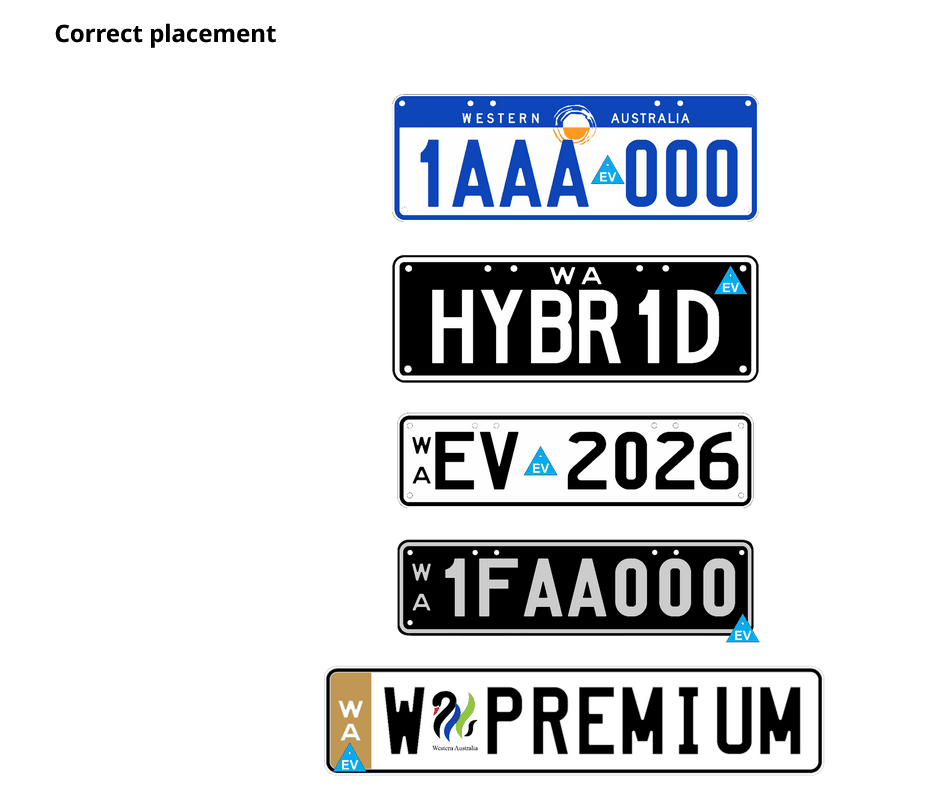
- Place labels on both front and rear plates
- Ensure a label is placed on auxiliary custom plates, if applicable
- Labels must be displayed upright
- Labels must not block out any characters on the number plates
Where to Buy EV Tags
EV tags can typically be purchased from automotive stores or online. They are usually adhesive, allowing for easy application.
Why Was This Change Introduced?
Electric, hydrogen-powered, and hybrid vehicles pose unique hazards compared to internal combustion engines. Pressurised hydrogen tanks and high-voltage batteries require special safety procedures in the event of fires or accidents.
EV tags allow emergency responders to quickly identify EV or hydrogen-powered vehicles so they can adjust their safety procedures.
These label regulations are intended to keep everyone, particularly first responders, safer. The new WA EV label requirements also align WA with other jurisdictions that already implemented these tag requirements.
You May Also Like: EV vs. Hybrid Cars: Everything You Need to Know
Electric Vehicle Label and Tag Requirements in Other States
Many other jurisdictions have already implemented EV label requirements, as shown here:
| Area | EV Tag Requirements | Deadline |
| Queensland | Must be displayed for EVs built or modified after 1 January 2019 | Already in place |
| New South Wales | EVs must feature clear labels on front and rear plates | Already implemented |
| Western Australia | Mandated EV tags for all electric, hydrogen-powered, and hybrid vehicles | 1 January 2027 |
| Tasmania | *No information available. | *Contact your state government to check for any tag updates |
| Victoria | Electric cars registered from 4 October 2020 must display EV label or ‘H’ label for hydrogen-powered vehicles | Already implemented |
| Australian Capital Territory | Electric, hybrid, or hydrogen-powered vehicles built after 1 January 2019 must display an ‘EV’ label | Already implemented; drivers that fail to display appropriate EV tags may get an infringement notice |
| South Australia | EVs, hybrids, and hydrogen fuel cell vehicles built or modified after 1 January 2019 must display appropriate safety tags | Already in place |
| Northern Territory | EV tags are mandated for vehicles built on or after 1 January 2019 | Already implemented as of 1 March 2023 |
WA EV Label Requirements 2026
If you drive an electric, hydrogen-powered, or hybrid vehicle in Perth, is it appropriately labeled? Now is a great time to make sure you comply with these new regulations ahead of the 1 January 2027 deadline.
We’re excited to see these new label requirements, as they signify a commitment to the safety of our emergency responders. These EV tag requirements also mark the continued acceptance and progress of electric vehicles.